
A Custom food trailer is a working kitchen, not just transportation. Before choosing a size or equipment package, consider your menu, service volume, towing setup and where you plan to operate. Planning these details together helps you build a practical mobile food business.
At St. Croix Trailers, we help turn those requirements into a build scope. Equipment, utilities, storage and customer service should work together rather than compete for space.
Why Quality Matters for Your Bottom Line
Equipment downtime interrupts service and adds cost. When comparing trailers, look beyond the purchase price to maintenance access, component availability and the suitability of the layout.
The chassis, axles, floor and equipment mounts need to be evaluated for the completed trailer and its operating loads. Frame material alone does not establish capacity or durability.
Getting the Right Gear
Start with the equipment your menu actually needs. Its dimensions, utility requirements and service clearances shape the kitchen layout.
- Create a workflow where there is a minimum number of steps.
- Put the preparation table close to the cooling equipment.
- Make sure the sales system is protected from heat.
- Use a non-slip floor that is grease-resistant.
A custom layout can reduce unnecessary movement. Allow space for staff to pass, open appliances and work without blocking exits.
Ready to plan your custom food trailer?
Navigating the Rules
Requirements vary by location, menu and equipment. Identify the applicable health, fire, electrical and other review requirements before finalizing the build.
- Check if your trailer is equipped with an appropriate fire extinguishing system.
- Make sure that your water heaters are appropriately sized for you.
- See to it that your sinks are properly located.
- Confirm whether grease management equipment is required for your operation.
Plan review and permits are separate from purchasing a trailer. Final acceptance rests with the authorities responsible for your operating location; no standard layout guarantees approval everywhere.
Specialized Builds for Unique Menus
Some menus need more than just a stove and a fridge. If you are doing specific styles of cooking, you need a setup that is designed for that heat and smoke.
- Commercial food trailers for high-volume frying.
- Dedicated ventilation for high-heat ranges.
- External hookups for propane and electric.
- Ample storage for bulk ingredients.
Don’t force a square peg into a round hole. If you have a special vision, find a builder who understands how to customize the layout to fit your specific style.
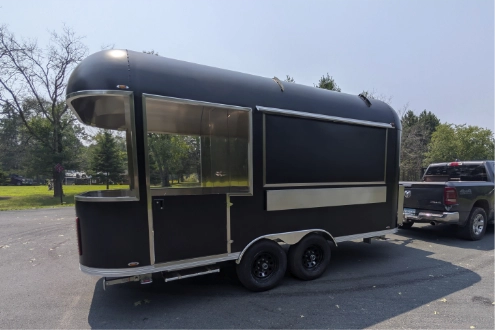
Financing Your Big Dream
Custom concession trailer financing may help spread the purchase cost over time. Compare total cost, payment schedules, fees and required deposits before committing.
Financing is subject to the lender’s approval and terms. Include operating expenses and a contingency in your budget, not just the trailer payment.
Designing for Efficiency
Custom BBQ Porch Trailers can provide a dedicated area for suitable outdoor cooking equipment. The design still needs to address weather, clearances, fire safety, access and loaded weight.
- Smoking porch area.
- Quick clean exterior surfaces.
- Strong tie-downs for your gear.
- Proper routing of gas lines to the porch.
Moving suitable cooking equipment outside can reduce some indoor heat and smoke, but it does not eliminate ventilation, cooling or safe-separation requirements.
Technology and Cooking Power
A pizza oven trailer needs a layout designed around the specific oven. Its weight, mounting requirements, fuel type and heat output must be considered alongside refrigeration and prep space.
- Check if you need a generator for high-draw equipment.
- Ensure that your electrical supply system is balanced.
- Buy quality refrigeration systems.
- Consider efficient lighting as part of the electrical design.
The technology you use simplifies your life, but at the same time, it increases your electrical requirements. It is important to ensure that your load capacity is adequate.
Ready to build your food business?
Why You Should Choose St. Croix Trailers
St. Croix Trailers helps customers plan custom mobile kitchens around their equipment and workflow. Start with a preliminary scope and budget, then use the design and engineering stage to resolve layout, utility loads and structural details before fabrication.
Conclusion
A useful trailer starts with a clear menu, equipment list and operating plan. Take time to confirm the build scope, approvals, maintenance needs and total budget before moving forward.
FAQ’s
1. How do you plan for local requirements?
Tell us where you intend to operate and share any requirements supplied by your reviewing authorities. These inform the design; required permits, inspections and operating approvals must still be completed.
2. Is financing available for custom trailers?
Ask about current financing options for your proposed build. Availability, eligibility, rates and funding schedules are determined by the lender, not guaranteed by the trailer quote.
3. What is the benefit of a custom build?
A custom build lets you plan equipment, storage and service areas around your menu. Final placement depends on clearances, utilities, weight and other design constraints.
4. How long does a food trailer typically last?
Service life varies with construction, operating conditions and maintenance. Follow the maintenance instructions for the trailer and its components, and inspect seals, tires, brakes and structural connections regularly.
5. Do I need special training to operate these trailers?
Operators should understand the installed equipment and follow its manuals and required training. Gas, electrical and fire-system work should be handled by appropriately qualified professionals.