
Your ANSUL Fire Suppression System Food Trailer: Designed for Total Protection
Running a mobile kitchen means working in tight quarters with serious heat. Building an ANSUL fire suppression system food trailer is about more than just checking a box for the local fire marshal. It is about protecting your life, your crew, and your investment when things go wrong. We custom-build only, with zero pre-built inventory on our lot. From the exact placement of your fryers to the automated gas shutoffs, safety is engineered into the space from day one. When service starts, you operate knowing heavy-duty protection is already in place.
Get A Quote
Engineered for the Realities of Mobile Kitchens
A properly built ANSUL fire suppression system food trailer must account for confined cooking spaces, road vibration, and concentrated heat. Oil vapor, open flames, and heavy grease accumulation increase fire risk inside a trailer much faster than in a traditional brick-and-mortar kitchen
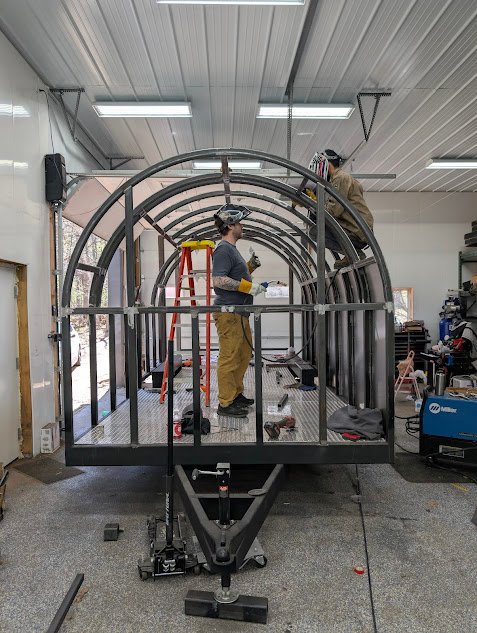
We don't cut corners to maximize profit at the expense of your safety. Everything is built from the ground up, starting with a 6x2 mainframe at the bare minimum—absolutely no 3x2 or 2x4 frames. A commercial Type I hood and a fully loaded wet chemical tank add serious weight to your rig. A flimsy, pre-built shell trailer will flex under that weight on the road, which can easily compromise the suppression piping. We build heavy-duty frames so your life-safety systems remain rock solid over thousands of miles
The Winter Advantage: Zero Seasonal Removal Fees
Here is a massive financial benefit that most builders won’t tell you about:
An ANSUL system does not freeze. While the system costs more upfront, it pays you back every single winter. Because the chemical agent can withstand freezing temperatures, you can leave the system fully installed year-round. That means you do not have to pay a fire suppression company $500 to come out, remove your system, store it inside for the winter, and then pay them again to reinstall it in the spring. You park it, winterize your plumbing, and walk away.
1
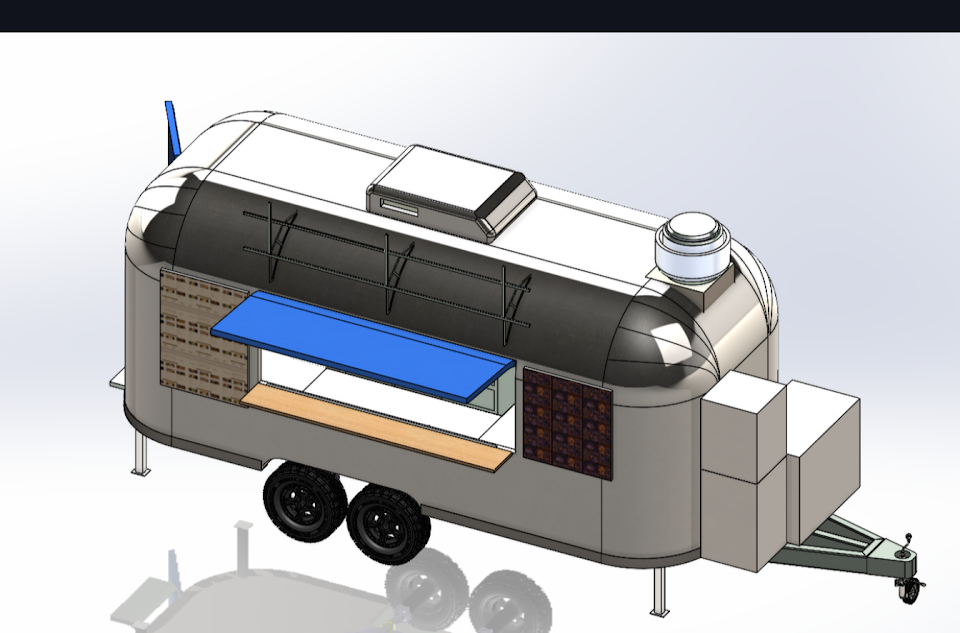
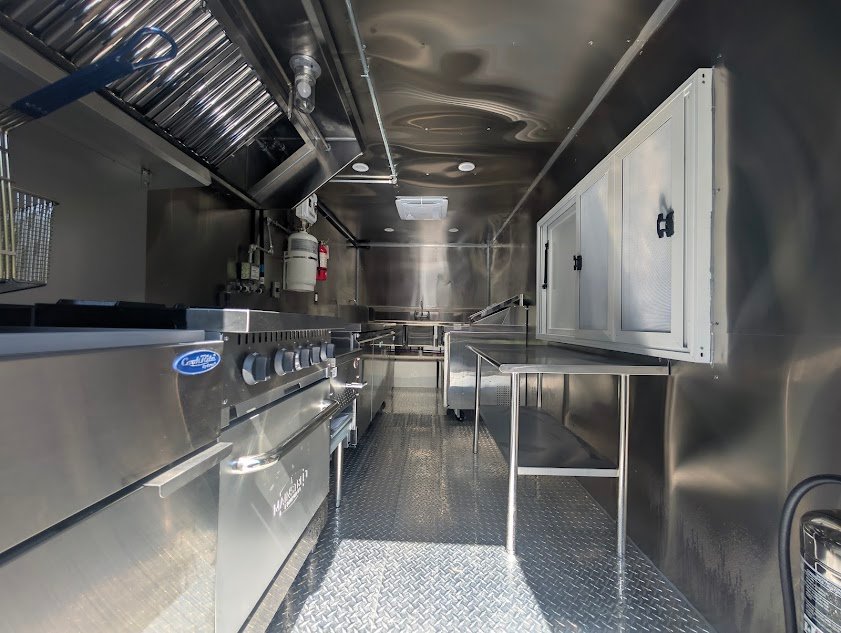
Technical Specifications and Safety Integration
After the 2D layout is signed off, your build moves into detailed system coordination. We select materials based on long-term durability and food safety, not just what’s cheapest at the hardware store.
Your custom setup includes:
- Commercial Type I hood configured explicitly for ANSUL compatibility.
- Stainless Steel Overhead Piping: Most builders use black steel for the overhead suppression piping because it’s cheaper. The reality? Kitchens are full of steam and moisture. Over time, that black steel rusts. That rust flakes off and falls directly into the food cooking below. We use stainless steel for all discharge piping above the cook line to completely eliminate the risk of rust flaking and food contamination.
- ANSUL wet chemical tank securely mounted within a protected cabinet.
- Gas solenoid valves tied directly to suppression activation.
- Electrical interlock systems that immediately cut power to the cooking line.
- Approved fire-retardant material behind the cook line: We don’t just slap stainless steel over standard plywood; we use certified, heat-resistant barriers to meet strict national safety standards.
2
Contracts, Pricing & Deposit Structure
Once your equipment list and suppression requirements are approved, we move into the contract. Fully custom, ground-up builds are quoted directly around your exact, approved specifications.
To move forward into the official blueprints and engineering phase, we require a $2,500 engineering deposit. This is not an extra fee—100% of this amount goes directly toward the final build cost of your trailer.
Once shop drawings are signed off, our build payment structure protects your momentum:
- 60% Deposit (Due 3 weeks prior to production): This allows us to immediately order your heavy-duty steel, Type I hoods, ANSUL components, and commercial cooking equipment.
- 30% Progress Payment: Billed as your trailer takes shape and hits key construction milestones.
- 10% Final Payment: Due upon completion, inspection, and hand-off.
3

Engineering & Fire Code Compliance
Before fabrication begins, our engineering team prepares detailed shop drawings. We literally build to all NATIONAL CODES for gas, plumbing, electrical, and fire. If you took the rigorous national building codes for a brick-and-mortar structure and applied them to a trailer, that is exactly what we do. Our engineering is designed to be 50-state compliant (with specific attention to the high standards of the national code). We draft engineered hood schematics, calculate agent discharge distribution, and cross-check the entire build against these national standards. You review the drawings, and only after you sign off does construction move forward.
4
Production & Final Safety Verification
During fabrication, our crew builds from the bare frame up. Structural elements, ventilation, and suppression components are installed in proper sequence—not retrofitted or crammed in at the last minute.
Over the 3 to 5 month build timeline, we share clear updates, photos, and real progress. Before hand-off, the trailer goes through rigorous pressure testing, electrical validation, and a full safety inspection to ensure the ANSUL system is ready for activation and local fire marshal approval. Every completed trailer also comes with a verified Manufacturer’s Certificate of Origin (MCO).
5
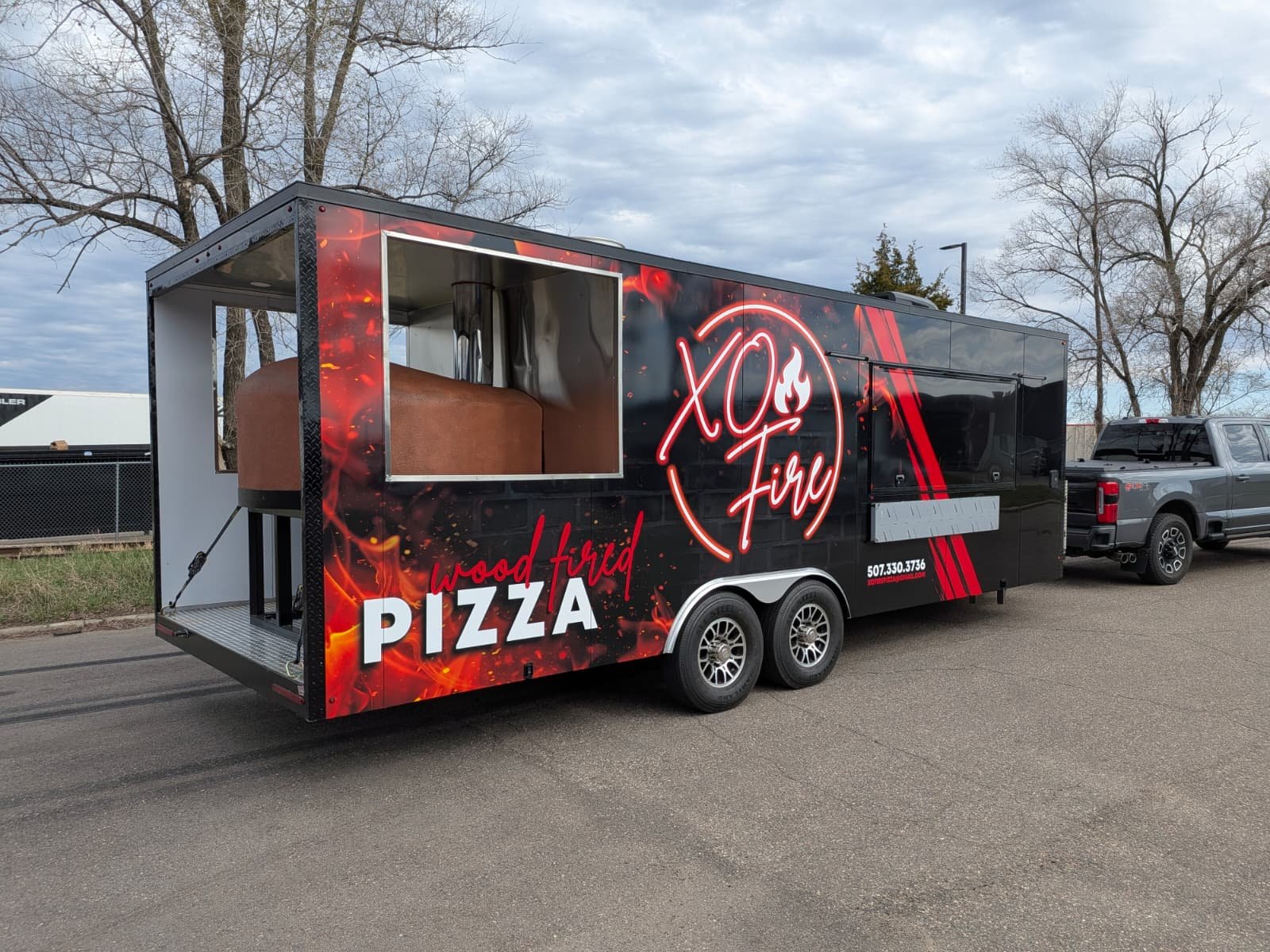
Why Trust Our Build Approach?
Fire suppression in a mobile environment demands absolute precision. There is no extra space for error
Quality That Outlasts the Competition
We build strictly from the ground up on heavy-duty 6×2 mainframes. No pre-built inventory, no flexible walls. Your suppression system is mounted to a structure built for long-term use
No Compromises on Food Safety
By using stainless steel piping above the cook line instead of the industry-standard black steel, we eliminate the risk of overhead rust flaking directly into your fryers and flat tops. Your kitchen stays as clean as the day it was built
True National Building Standards
We don’t just meet minimum “trailer” standards; we build strictly to national codes for fire, gas, electrical, and plumbing
Ready to Build a Safer Mobile Kitchen?
If your menu includes high-heat cooking, your trailer needs built-in, code-compliant protection. We are here and ready to talk
FAQs
We integrate the suppression system during the raw fabrication phase, ensuring exact hood compatibility and secure structural mounting on 6×2 steel frames. We use stainless steel piping overhead to prevent rust and build to strict national codes, ensuring the system is a core part of the trailer’s safety infrastructure.
Generally, deep fryers, flat tops, griddles, charbroilers, woks, and any other grease-producing appliances require wet chemical suppression coverage to meet fire safety regulations.
Yes. When activated, the ANSUL system is mechanically configured to instantly cut the fuel supply (gas solenoid) and electrical power to the affected cooking equipment, preventing the fire from being re-ignited.
No. The wet chemical agent in an ANSUL system does not freeze. Unlike some trailer systems that require a fire suppression company to remove, store, and reinstall the setup every winter (costing $500 or more each time), your system stays inside your rig year-round.
Black steel is cheaper, but it rusts quickly in a high-moisture kitchen environment. When used for the overhead suppression lines, that rust eventually flakes off and drops directly into the food you are cooking below. We use stainless steel piping above the cook line to completely eliminate the risk of rust flaking and food contamination.