
Starting a mobile food business sounds exciting—until real-world challenges appear: tight workspaces, tripped breakers, and slow service flow.
That’s where custom food trucks and custom food trailers make a major difference. When a mobile kitchen trailer is engineered around how you actually operate, service becomes faster, workflow improves, and daily stress drops.
Many operators discover too late that the trailer itself—not just the menu—determines how efficiently the business runs. This guide explains why serious operators choose custom concession trailers built from the ground up instead of pre-built shells.
Built Around Your Menu, Not a Generic Layout
One of the biggest advantages of custom food trucks is layout flexibility. Instead of forcing a menu into a fixed space, the trailer is designed around specific equipment and workflow using our Engineering 3.0 process.
Menu-Specific Engineering
- Taco Concepts: Require distinct “hot” and “cold” zones for efficient prep and plating.
- Coffee Trailers: Require precise plumbing systems and high-amperage electrical planning for espresso equipment.
- Fried-Food Concepts: Require NFPA-96 ventilation and integrated fire suppression systems.
Experienced concession trailer manufacturers design layouts to support the menu from day one. A well-engineered layout reduces staff congestion and improves ticket times.
Better Workflow Means Higher Daily Revenue
Efficiency directly impacts revenue in a mobile food business trailer. Every unnecessary step during service reduces throughput and limits daily sales.
A custom concession trailer eliminates common bottlenecks by providing:
- Logical Flow: A linear Prep-to-Cook-to-Serve workflow.
- Power Capacity: Electrical capacity engineered for peak load demand.
- Zone Optimization: Storage placement designed around service movement.
- Ergonomics: Equipment positioned for minimal staff motion.
Even small workflow improvements can translate into thousands of dollars of additional revenue over a busy season.
The Compliance Advantage: Avoiding “Red Tags”
Health and Fire inspections are often the biggest challenge for new operators. Working with food truck builders who understand national codes ensures the trailer is designed for compliance from the start.
The St. Croix Compliance Standard
- NFPA 96 Ventilation: Commercial hood systems sized specifically for the cooking line.
- NEC Electrical Systems: Commercial wiring designed for continuous equipment loads.
- Commercial Plumbing: Proper tank sizing, sanitation layout, and air-gap protection.
Building for compliance prevents costly delays, failed inspections, and “red tags” that shut down under-engineered trailers.
(H2) Durability: The 6×2 Mainframe Difference
Low-cost trailers often lead to long-term repair costs. A custom commercial food trailer must be designed for daily transport, not occasional hauling.
St. Croix Trailers builds on a 6×2 steel mainframe with heavy-duty axles standard. This structural rigidity reduces frame flex that can cause:
- Gas line fatigue
- Plumbing failures
- Wall separation
- Equipment mounting stress
Durable construction protects uptime, reduces maintenance costs, and preserves asset value.
Professional Appearance Builds Trust
A professionally built custom food trailer strengthens brand credibility. Customers, event organizers, and corporate clients recognize build quality.
A commercial-grade trailer can:
- Attract larger events
- Support premium pricing
- Increase catering opportunities
- Strengthen brand perception
Exterior branding paired with a verified Manufacturer’s Certificate of Origin (MCO) signals legitimacy and professionalism.
Why St. Croix Trailers?
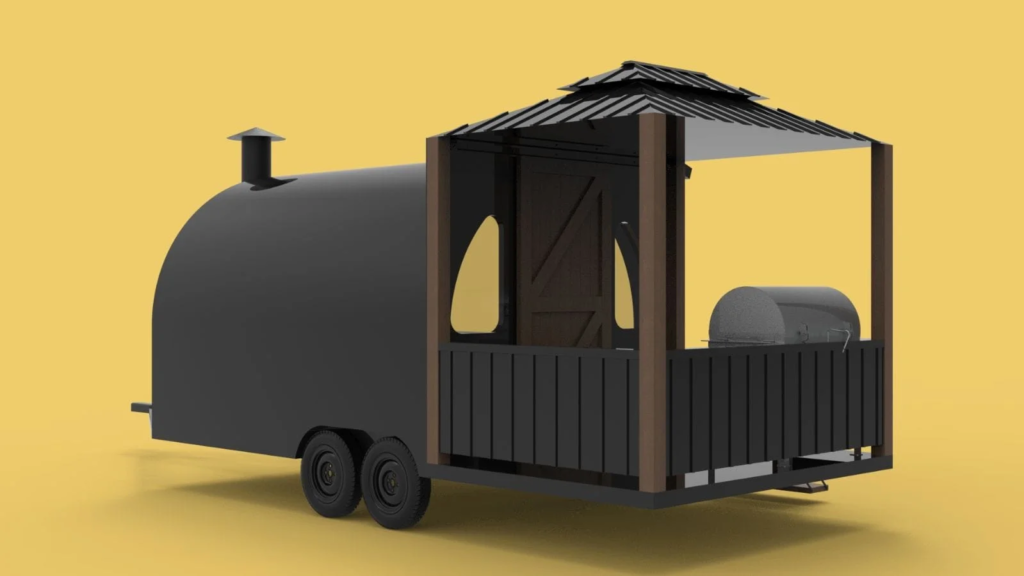
St. Croix Trailers builds custom food trucks, custom food trailers, and mobile kitchen trailers engineered for real-world operation.
Instead of modifying cargo trailers, each unit is designed from the ground up to support:
- Workflow efficiency
- Equipment integration
- Commercial utility capacity
- National Code Compliance
- Long-term durability
Among concession trailer manufacturers, this engineering-first approach ensures consistent performance during daily service.
Conclusion
A custom food trailer is more than a vehicle—it’s the operational foundation of a mobile food business.
Designing around workflow, utilities, and equipment allows operators to remain efficient, compliant, and profitable. Choosing a manufacturer focused on engineering and compliance ensures the trailer supports the business for years.
[Start Your Custom Build Today]
FAQs
Q. Are custom food trailers worth the investment?
A. Yes. They improve throughput, reduce long-term repair costs, and simplify inspections—increasing ROI over time.
Q. How long does a custom build take?
A. Most ground-up builds take 1-2months, including Engineering 3.0 design, sourcing, and compliance testing.
Q. Do custom trailers help with inspections?
A. Yes. Commercial plumbing, NEC electrical systems, and NFPA-compliant ventilation simplify approvals significantly.
Q. Can I choose my own equipment?
A. Yes. Electrical and gas systems are engineered around the selected equipment to ensure safety and capacity.
Q. Why use a 6×2 mainframe?
A. Mobile kitchens are heavy. A rigid steel frame protects plumbing, gas lines, and equipment from vibration-related failures.